Assesment 1
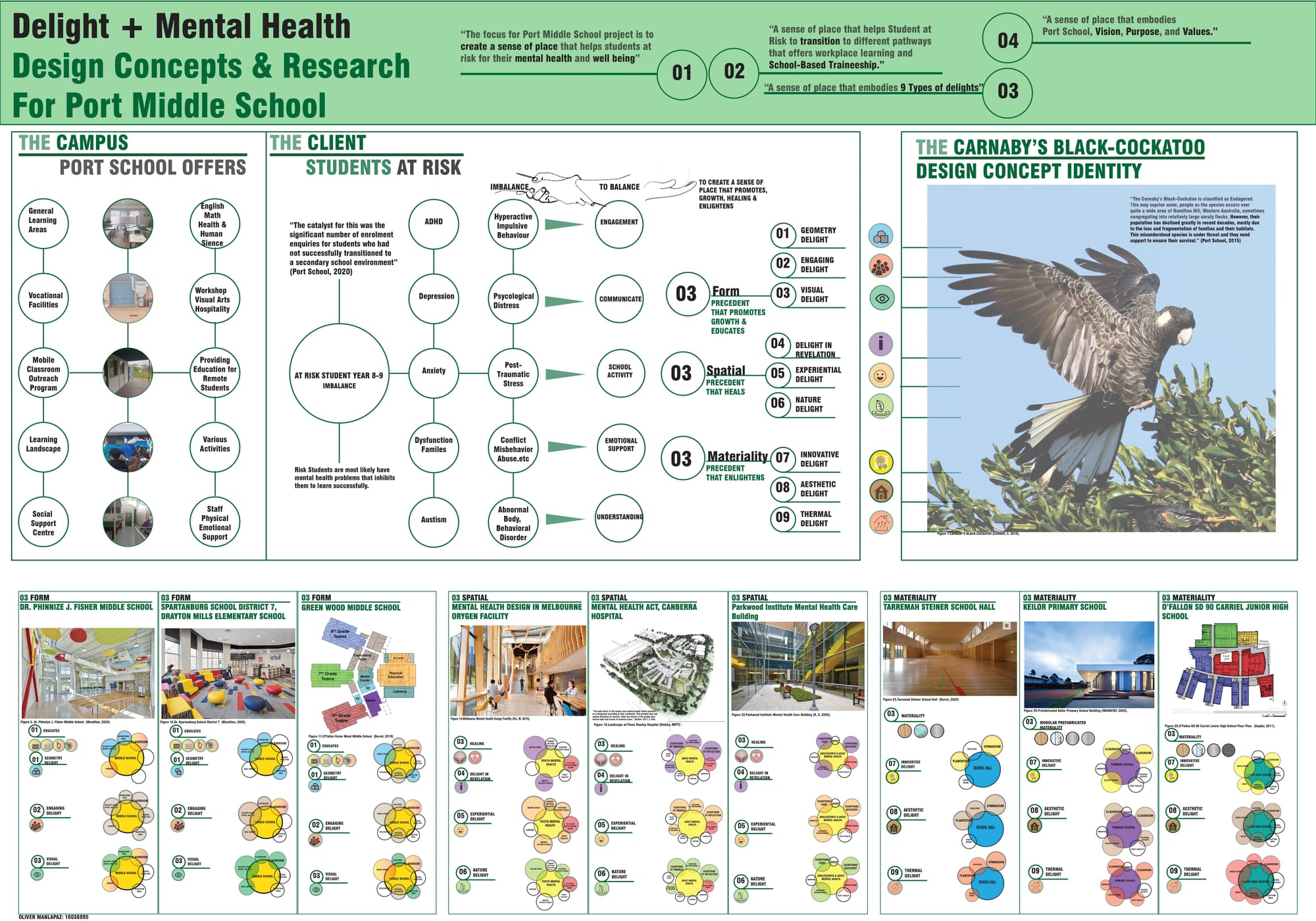
Delight Research and Design Psychological Factor & Mental Health
Thermal Delight (Heschong 2002, p. )
According to Heschong (2002, p.21) that in thermal delight there is thermal extreme which is hot or cold and this two extreme are close at hand. The author also mentioned that there is probably a reason why this 2 is right next to each other.
“The first is Physiological: that availability of extremes ensures that we can move from one to the other to maintain a thermal balance.” (Heschong 2002, p.21).
As stated by the author the first reason is that it gives safety to experience both of the thermal extreme.
“The second reason to have thermal extremes close together might be termed aesthetic” (Heschong 2002, p.22). Heschong mentioned that the experience of this thermal extreme create an acute contrast that reminded us of cold and warm temperature.
“Places that remind us of the presence of people, of the life and activities that they generate capture some of this sense of warmth” (Heshong 2002, p.27). The essence of thermal experience affects us differently. According to Heschong (2002, p.27) that if we get cold we tend to feel numb and tense however when we go to a place that seems warmth it sooth us and comfort us to relive the tension from cold thermal experience and it can happen the other way around.
Virtual Real Space (Grosz, 2001).
According to Grosz (2001, p.98) that Digital technologies have change the way of communicating informations.
“Perhaps the most striking transformation effected by these technologies is the change in our perceptions of materiality, space, and information, which is bound directly or indirectly to affect how we understand architecture, habitation, and the built environment” (Grosz 2001, p.99).
Elemental Architecture (Dinkha, 2017)
“When patients stay in hospitals or other healthcare facilities, they have an enhanced awareness of their surroundings. This means that the indoor environment quality is of particular importance for inducing sleep, recovery and wellbeing. Noise pollution is a problem because it can adversely affect all of these elements.” (Dinkha 2017, p.29).
Design Elements stated by Dinkha for a mental hospital
- Noise Control
- Immediate traffic
- Slamming doors, clanking latches
- Staff conversations
- Visual privacy
- Visual delight
- Air quality
- Need for fresh air, solarium, or roof garden.
- Avoidance of noxious off gassing from synthetic materials
- Admitting Ample natural light where possible
- Nonglare lighting in patient room
- Ability to control intensity of light
- Patient room lighting should be full spectrum
- Privacy
- Ability to control view of the outdoors
- Secure place for personal belongings
- Control over the immediate surroundings (Interior Design)
- Outreach (community)
Visual Delight:
“Can nature enhance the mindset of an individual? Undoubtedly it does, people of all types, religion, and backgrounds have some sort of connection to nature. Nature presents everlasting benefits to our health and mental state; it eases the pressure on the mind even if only for a little while.” (Dinkha 2017, p.30).
According to Dinkha that the impact of nature like green space helps to alleviate mental fatigue and helps to relax it also promotes social engagement to distress.
Environmental Psychology Bechtel, R., & Ts'erts'man, A. (2003).
“Mesosystems involve settings in which individuals engage for a significant amount of time, such as school or work environments.” (Bechtel, R., & Ts'erts'man, A. 2003, p.130)
(Bechtel, R., & Ts'erts'man, A. 2003, p.131)
According to Bechtel & Ts’erts’man (2003, p.131-132) that “Table 8.1 illustrates how the systems or socioecological approach relates to the pathologies of dissociation, agoraphobia, and anorexia nervosa. In each disorder, notice how the different levels of micro, meso, exo, and macro have a bearing on each other. For example, dissociation may operate at the micro system, where an individual’s conception of self is deeply affected; at the mesosystem , where family dynamics play a role; at the exosystem, where child sexual abuse (the trauma) may be detected by school official or by the local police; and at the macrosystem, where the perpetrator is punishable under the law”.
Childrens Environment:
The term place preference studies refers mainly to studies were children described favorite (important, liked, valued) or unpleasant (disliked) places in their everyday surroundings.” Thereafter, the development of place preference and factors affecting the selection of favorite places, restoration, and self and emotions regulation of favorite places are described.
Theory of Place Preference
- Self-regulation
- Place Identity
- Place attachment
- Privacy Regulation
- Restorative effects of environment
Privacy:
Violating children’s needs for privacy, such as in crowded homes or day care settings, seems to result either in psychological withdrawal or aggression depending on the length of crowding and individual characteristics (Maxwell, 1966).
On the positive side it can be said that, develop mentally, the availability of privacy is closely related to the achievement of self-identity and self-esteem (Laufer & Wolfe, 1976; Newell, 1994)
The Architecture of Happiness: De Botton, A. (2006).
“It follows that the balance we approve of in architecture, and which we anoint with the word ‘beautiful’, alludes to a state that, on a psychological level, we can describe as mental health or happiness. Like buildings, we, too, contain opposites which can be more or less successfully handled. We, too, can descend towards extremes- of chaos or rigidity, decadence or austerity, machismo or effeminacy- even as we instinctively recognize that our well-being depends on our being able both to accommodate and to cancel out our polarities” (De Botton 2006, p.167).
According to De botton (2006, p.213) that psychology plays a big role in terms of creating a good and bad architecture. He mentioned that our happiness relies to congenial environment created by architects.
9 Architectural Precedents:
Mental health design in Melbourne facility
Figure1.Melbourne Mental Health Design Facility (Vic, M. 2019).
According to Billard Leece Partnership Architects (2018) thatThe design consideration includes thoughts and feelings of young people; this includes the participation and engagement of the Orygen and OYH.
The Key Points:
Figure2.Melbourne Mental Health Design Facility (Vic, M. 2019).
- Gender Neutral Design
- Warm Materiality
- Home-like space
The sample precedent targets some of the issues that involve young people (Sexual Discrimination, Gender Inequality, Behaviors). The precedent design approach can be useful for Port Middle School which is relevant to current student behavior and psychological factors that affecting their studious environment.
Mental health act, Canberra Hospital
The next precedent focus on design layout that promotes effective psychological health that is beneficial for Port school possible design layout. This precedent targets the depression and anxiety of mental patients but can be applied to young students who have depression and mental health issues.
“The heart of this building is the socialization spine that connects all occupants as well as psychiatrist and nurses. This Central space gives a sense of freedom to interact with other people.” (Dinkha 2017, p.109).
“The main driver of this project was spatial quality, where patients are categorized according to their conditions. This provides time and spatial efficiency for doctors. Other key factors of the design were natural light and access to external areas.” (Dinkha 2017, p.109).
Figure 3.Landscape at Fiona Stanley Hospital (Dinkha, 2017).
Design Concept Diagram by Dinkha
Figure 4.Typical mental health unit layout (Dinkha, 2017).
Figure 4.Programmes (Dinkha, 2017).
Designing for Mental Health Facilities
This precedents focus on designing for mental health suggesting design elements that benefits patients.
Figure 5.St Joseph Healthcare (R, C, 2020).
- Single Room Care
- Design helps to de-escalate issues for individuals providing them private space
- Natural Light and Exterior Views
- Positive influence daylight has on human health
- Variety of Spaces
- Where individuals can move as they feel comfortable
- Access to Outdoors
- Quite Area for contemplation, Recreational activities
- Spiritual Spaces
- Includes Chapels or multi-faith spaces
- R, C. (2020).
- To be continued…
Designing for Mental Health Facilities
Book Reference:
Weller, R. (2008). Landscape (Sub)Urbanism in Theory and Practice. Landscape Journal, 27(2), 247-267. Retrieved August 19, 2020, from www.jstor.org/stable/43332451
Mitrovic, B. (2014). Philosophy, Architecture and Architectural Education. Architectural Theory, 1-8 Retrieved August 19, 2020, from https://www.academia.edu/6629448/Philosophy_Architecture_and_Architectural_Education
Glenn Robert, L. (1980). A psychology of building: how we shape and experience our structured space / Glenn Robert Lym. Psychological aspec, 155. Retrieved August 19, 2020, from http://link.library.curtin.edu.au/p?pid=CUR_ALMA2193243880001951
Bechtel, R., & Ts'erts'man, A. (2003). Handbook of Environmental Psychology (pp. 1-737). Hoboken: Wiley. Retrieved August 19, 2020, from http://link.library.curtin.edu.au/p?pid=CUR_ALMA51112997800001951
De Botton, A. (2006). The architecture of happiness (p. 280). Australia: A division of Pearson Group Australia Pty, LTD, 2006. Retrieved August 19, 2020, from http://link.library.curtin.edu.au/p?pid=CUR_ALMA2194617860001951
Grosz, E. (2001). Architecture from the outside (pp. 1-243). Cambridge, Mass.: MIT Press. Retrieved August 19, 2020, from 0262571498
Heschong, L. (2002). Thermal delight in architecture (pp. 1-9). Cambridge, Mass.: M.I.T. Press. Retrieved August 19, 2020, from
http://link.library.curtin.edu.au/p?pid=CUR_ALMA21100946940001951
Laufer, R., & Wolfe, M. (1976). The interpersonal and environmental context of privacy invasion and response. In P. Korosec-Serfaty (Ed.), Appropriation of space (pp.516-535). Strasbourg, France: Institut Louis Pasteur.
Maxwell, L. E. (1996). Multiple effects of home and day care crowding. Environment and Behavior, 28, 494-511.
Website for Design Precedents Reference:
Vic, M. (2019). Designing for mental health was of the utmost importance for the Orygen and OYH Parkville Building, which won Best Mental Health Design at the 2019 European Healthcare Design Awards in London. | Architecture & Design. Retrieved 19 August 2020, from https://www.architectureanddesign.com.au/projects/health-aged-care/mental-health-design-melbourne-facility#
Dinkha, S. (2017). Elementary architecture: architecture as a mechanism for alleviating mental health illness. An unpublished research project submitted in partial fulfilment of the requirements for the degree of Master of Architecture Professional, Unitec Institute of Technology, New Zealand. Retrieved 19 August 2020, from https://unitec.researchbank.ac.nz/handle/10652/3847
R, C. (2020). Designing for Mental Health Facilities. Retrieved 19 August 2020, from http://www.parkin.ca/blog/designing-for-mental-health-facilities/
Architects, H. (2020). Behavioral Health Facility Design Guide: Purposeful Best Practices | Thought Leadership | HMC Architects. Retrieved 19 August 2020, from https://hmcarchitects.com/news/behavioral-health-facility-design-guide-purposeful-best-practices-2018-09-12/
Zeidner, M., Matthews, G., & Roberts, R. D. (2009). What we know about emotional intelligence : How it affects learning, work, relationships, and our mental health. ProQuest Ebook Central https://ebookcentral.proquest.com
Jackson, P. L. (2009). Getting design right : A systems approach. ProQuest Ebook Central https://ebookcentral.proquest.com
